


Increase in domestic and foreign demand for domestic black rice contributes to increasing income, but the absence of modern milling infrastructure hindered its processing for exports
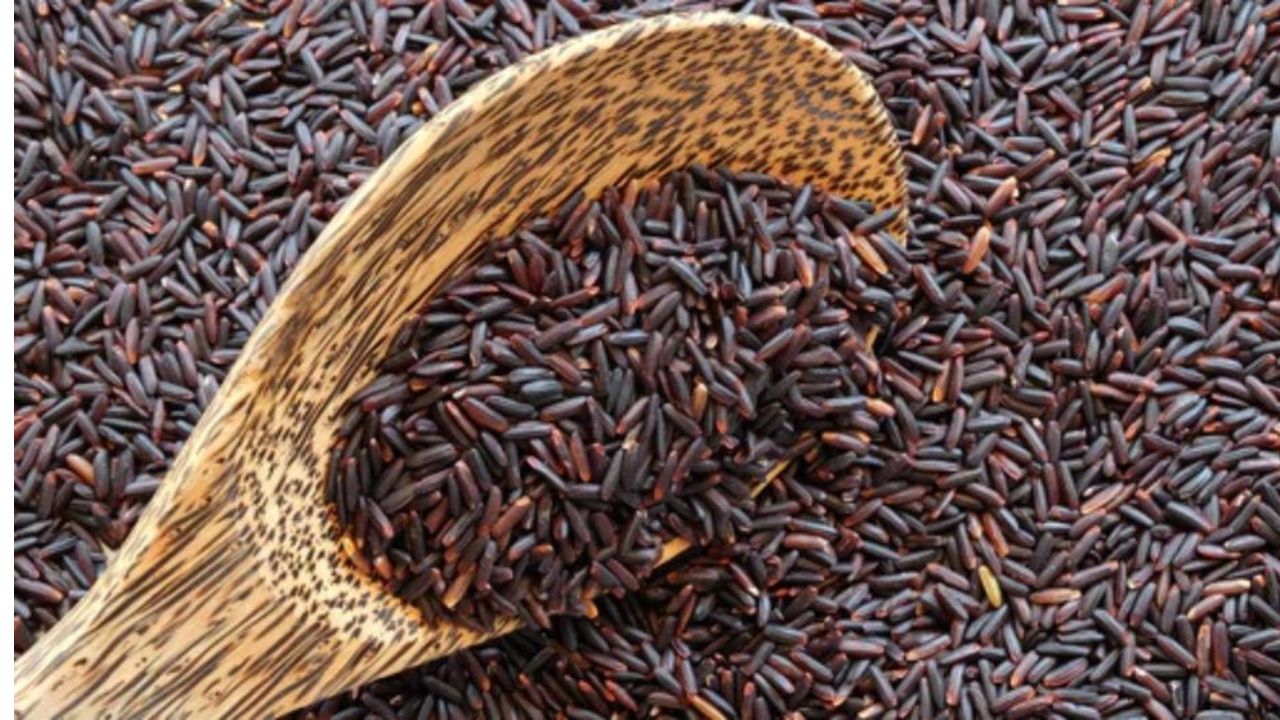
One of Manipur’s own native rice types, considered to be “black rice” or Chak-Hao, is slowly but surely making a name for itself as a ‘superfood’ around the world. While it is known for its nutrition-rich properties, Unique smell, and utterly ‘black’ appearance, it was long due to be acknowledged as a ‘economic game-changer’ for Manipur too. Yet, despite this surge in recognition, farmers/production companies within Manipur today face immense infrastructural issues, especially because there is a lack of ‘modern rice milling’ infrastructure.
Chak-Hao rice has been grown in Manipur for many years and has been of great significance to the people. Chak-Hao was known as a “royal food” and could only be afforded by the royalty. Its consumption was limited to certain occasions like religious rituals and celebrations. For many years, the health food was only eaten in Manipur. However, in recent years, its popularity has increased, and today it is a “superfood” sought after in many countries.
The chairman of the Chak-Hao rice Poireiton Organic Producer Company Limited, Chongtham Shanta, stated that the company has been functioning since 2016 in terms of the Mission Organic Value Chain Development for North Eastern Region scheme initiated by the Ministry of Agriculture and Farmers Welfare. The company faced the first few years of operation in terms of losses since it had no market. However, the company eventually became stable.
As per Shanta, Chak-Hao rice is now being produced every year in an average of 300 to 500 hectares. As a result of increased demand from other states over the past two years, yields have increased for farmers. However, according to him, the biggest setback has been the absence of updated milling facilities, resulting in most producers of Chak-Hao being constrained to market the product in seed form.
“Our company deals in and exports Chak-Hao rice produced by other farmer producer companies,” Shanta said, adding that his business sources rice from at least eight farmer producer companies.“Buyers from outside Manipur want Chak-Hao seed rice because of issues regarding uniform size, classification, and appearance,” he said.“We can’t get by without modern rice milling equipment to meet those requirements,” he said.“Also, Chak-Hao rice is not an essential food item for them, and they stock them for a longer period,” he stated.“So we deal in organic as well as Chak-Hao rice,” he concluded.
He emphasized that with a modern rice milling plant installed inside Manipur, it would be possible for farmers to produce rice that has equal quality. He added that this would have immense market value and that export possibilities would be wide open too. Shanta also clarified that Chak-Hao rice can be processed into parboiled rice since it has more market value with a longer shelf life if proper infrastructure was accessible.
But still, the exports of Chak-Hao rice are increasing. According to a report by Shanta, the Manipur government has just signed a memorandum of understanding for the export of 20 metric tons of Chak-Hao rice, along with its black and white variants, to Japan. The MoU was signed at the Bharat International Rice Conference 2025, which took place at the Bharat Mandapam in New Delhi.
Speaking to the Instances Network about the situation with the MOVCD-NER and the Manipur Department of Agriculture, where he is the head for the MOVCD-NER, Dr. Kh. Nimaichand said that the time when the scheme was started in 2015-16 and the rice got the Geographical Indication (GI) mark in 2020 was a turning point for Chak-Hao rice. This changed Chak-Hao rice into a ‘superfood’ recognized globally.
At present, about 5,000 hectares of land in Imphal West, Imphal East, Bishnupur, Thoubal, and Kakching are been occupied for growing Chak-Hao rice with an average production level of 2.5 metric tonnes per hectare. MOVCD-NER is presently on its fourth stage with support to three FPCs. They receive support for at least three years.
According to Dr. Nimaichand, Chak-Hao was a potentially valuable cash crop variety because of its high antioxidant properties, high fibre content, low glycemic index, vast vitamin, and mineral content, gluten-free properties, and special aroma.
Though black rice varieties can be found in other states of India, its special properties make Chak-Hao very appealing. Apart from these, consumption patterns in Manipur are also changing. While it was used for special occasions in the past, Chak-Hao is now gaining prominence in breakfast foods.
Since agri-culture still remains Manipur’s principal means of sustenance, it is believed that Chak-Hao rice still has a significant potential of accelerating economic growth. Since e-commerce markets and export markets open up, locally grown black rice is turning out to be an economic change-agent.
Also read : https://flikinews.com/anna-hazare-to-go-on-fast-unto-death-from-january/