

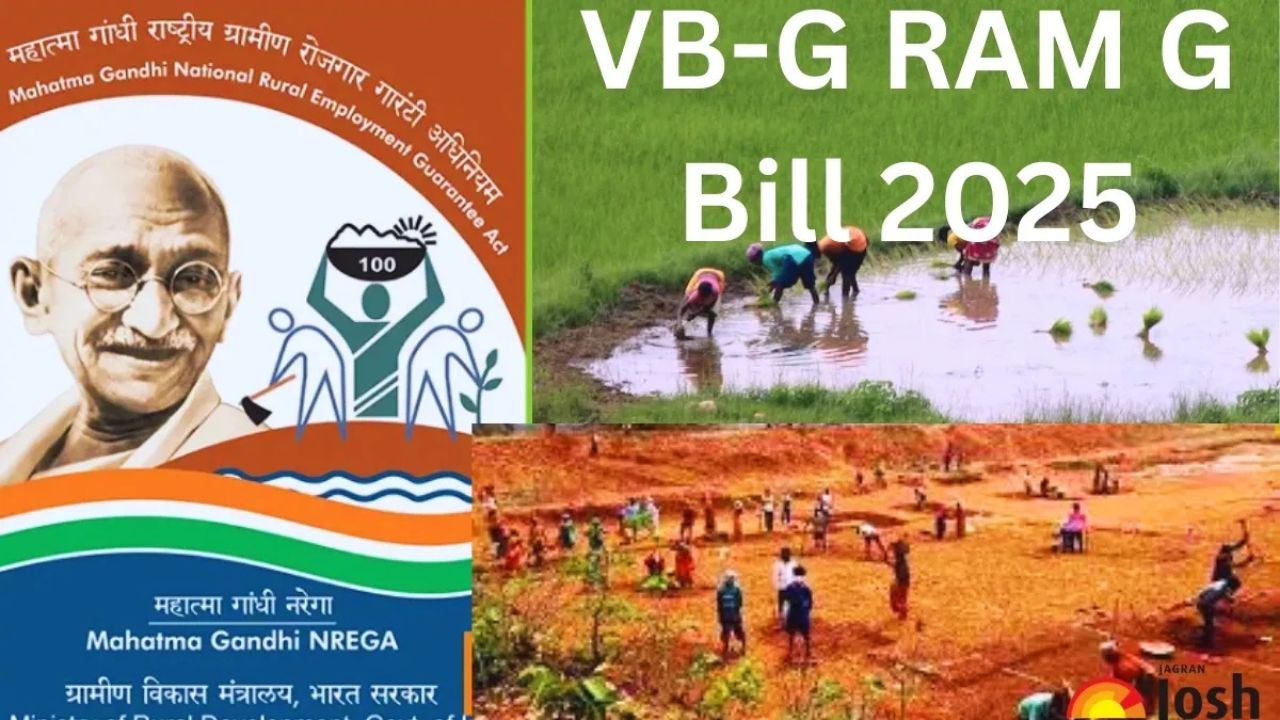
For close to two decades, Mahatma Gandhi National Rural Employment Guarantee Act (MGNREGA) has remained an integral part of rural employment assistance initiatives in India.
This has been providing employment in terms of wages within reachable distances in form of rural-level assets development, among other benefits, especially during the off-peak agricultural seasons. Over time, it has remained among the largest social programs in India, touching the lives of millions.
However, currently, the government has proposed another mechanism, which is Viksit Bharat-Guarantee for Rozgar and Ajeevika Mission Gramin Bill, which is usually referred to as the “VB-G RAM G Bill. This bill seeks to replace the function of the MGNREGA by focusing on the livelihood mission approach that combines rural employment with the development of rural livelihood infrastructure within the vision of Viksit Bharat 2047.
The Bill is an attempt at a transition in rural employment conceptualization. Whereas it was an enemy of the concept of a standalone right to employment, the Bill now sees employment in rural areas in the context of development priorities. The new Bill is seen to pose a threat to the states of workers and the principle of a right to employment.
Why the proposed change is necessary :
Since 2005, the MGNREGA scheme has been a right to employment. An individual in any rural household seeking involuntary unemployment could claim employment and compensation for up to 100 days in an year. It acts as an employment guarantee in situations of droughts or crop failure or slow seasons in agricultural development.Recently, it has been asserted that there has been a change in rural conditions due to improved connectivity, financial services, and job opportunities.
The need to comply with Viksit Bharat 2047, a vision for overall development, has also been cited as a reason to update the law.Characteristics of the VB-G RAM G Bill
More guaranteed workdays :
The proposed changes to the Bill are that the guaranteed number of workdays will now be 125 instead of 100 for every financial year, and these services are required by rural families who offer unskilled manual labor.Seasonal stoppage of workFor the first time, there will be an interval in the employment guarantee of up to 60 days every year to provide for the peak sowing and harvesting seasons so that farm labor is available.
Joint funding pool between centre and states :
Under the MGNREGA, the cost of all wages and a majority of costs of materials was paid by the central government. The proposed structure brings in a cost-sharing formula, with about 40 percent of the cost to be paid by states in general areas, and about 10 percent by states in hill and northeastern states.
Semi-monthly payment; Weekly
The salary payment system will be carried out on a weekly or at most a two weeks’ time to ensure timely and guaranteed financial benefits are received. There shall also be a special scale of remuneration for vulnerable groups like women, elderly people, people with physical disabilities, and those with serious health ailments.
Focused types of work :
The Bill focuses on delivering work in four key areas that include water security, rural infrastructure such as roads and storage, livelihood-related infrastructure, and climate adaptation and resilience projects. The target is to provide long-term assets that will aid the rural economy.
“What remains the same” refers to
The Bill still requires government to offer work when asked and retains the provision regarding unemployment allowance when work is not provided within the required time.
Why it matters :
MGNREGA has been amongst the biggest social safeguards for the poorest sections of countryside families in India. Criticisms have been that this shift will render this social security programme dependent upon government budgets instead of a right guaranteed through legal statute. Persons supporting such new legislation have claimed that this new legislation transforms and upgrades the employment program in the countryside of India.Next steps The VB-G RAM-G Bill will likely be tabled during Parliament’s Winter Session. When enacted, it will officially abolish MGNREGA, as it will introduce a new system that will transform rural employment guarantees in India.
Read More : Proposes Replacing MGNREGA with New Rural Employment Law : opposition says “what’s the point !!”