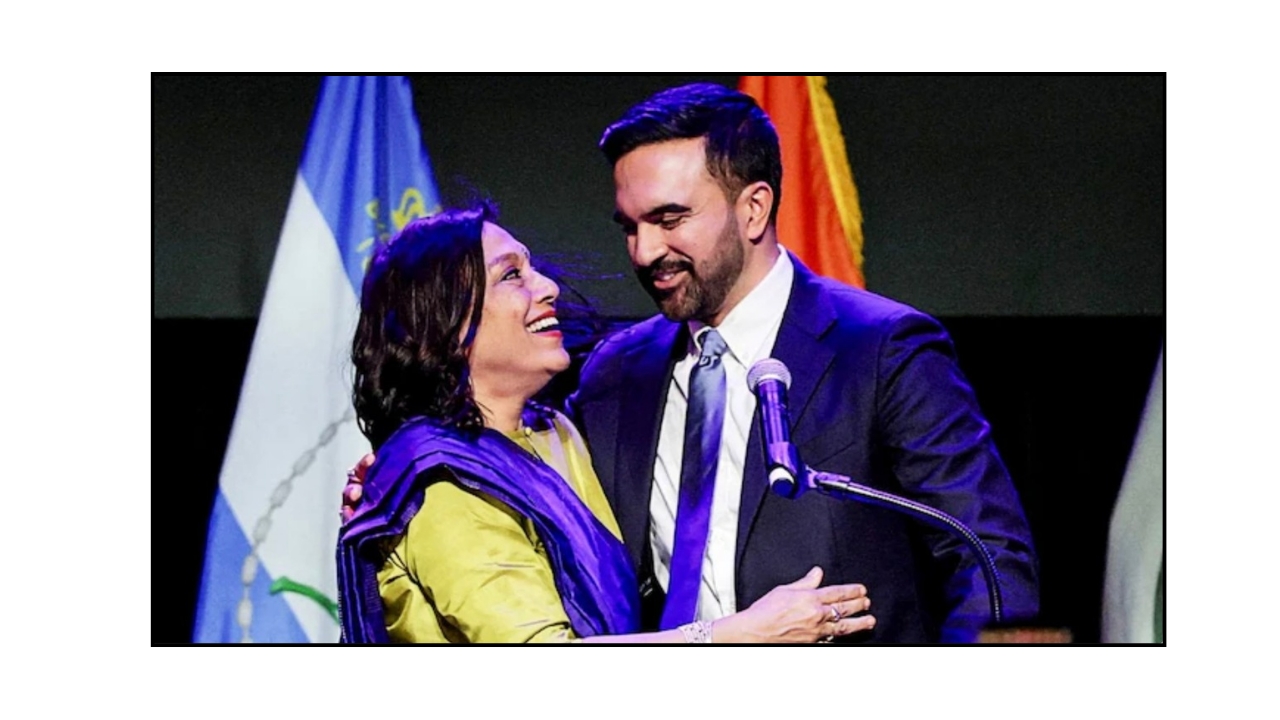



When Zohran Mamdani stepped onto the stage after being declared the new mayor of New York City on Wednesday, the applause wasn’t just for a political victory – it was for a story that seemed to leap straight out of a Mira Nair film.
His win,has rewritten New York’s political script. At 32, Mamdani has become the city’s first Muslim and second-youngest mayor — a moment of pride that has rippled across continents.
But even before the celebrations settled, another story began to unfold: the rediscovery of the woman whose influence, though indirect, seems to have shaped his journey — his mother, the celebrated filmmaker Mira Nair.
For many across India and the diaspora, the connection came as a delightful surprise. As news of his victory spread, timelines filled with clips from Monsoon Wedding, Salaam Bombay!, and The Namesake – cinematic worlds that Mira Nair built with sensitivity, courage, and a deep understanding of what it means to belong to more than one place at once.Those same themes -identity, migration, and community — quietly echo through Mamdani’s politics.
His campaign was not just a policy playbook; it was a performance of connection.His videos and reels — playful, poetic, and unapologetically rooted in South Asian culture – carried the exuberance of Bollywood while delivering the seriousness of civic reform. In one viral campaign video set to Deewangi Deewangi from Om Shanti Om, the young politician wove together nostalgia and inclusivity, making politics feel personal again.It was politics as storytelling — an art form his mother has long perfected.
“Mira Nair taught a generation how to see themselves on screen,” one social media user wrote after the election. “Now her son has taught New York how to see itself in politics.”
Indeed, Mira Nair’s career — from winning accolades at Cannes and Venice to establishing her own Mirabai Films and mentoring young artists — has always been defined by authenticity. Her lens has captured people caught between worlds, searching for dignity and meaning. It’s not hard to see how that sensibility might shape a son who believes leadership, too, begins with empathy.
Observers note that Mamdani’s campaign — vibrant, inclusive, and emotionally intelligent — carried the same DNA as his mother’s cinema. Both tell stories that are deeply human, grounded in everyday lives yet reaching for something larger.
As New York begins a new chapter under Mamdani’s leadership, it’s hard not to feel that this victory belongs to more than one generation — and more than one medium.
For Mira Nair, whose art has long blurred the borders between nations and hearts, the applause is echoing once again — this time not in a theatre, but in City Hall.
Her legacy has found a new screen: the city itself.