





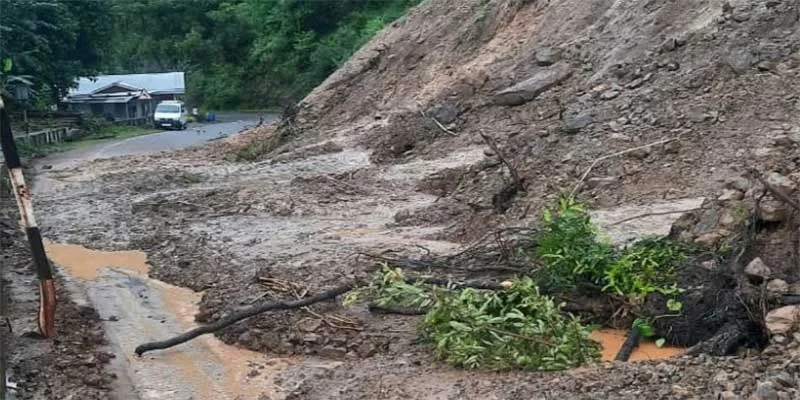
Torrential monsoon rains lashed Nagaland on Sunday, triggering multiple landslides that disrupted traffic along National Highway-29 (NH-29) and several alternate routes. Authorities have issued an urgent travel advisory as the State braces for more heavy rainfall in the coming days.
While no casualties have been reported so far, officials have urged residents and travellers to remain cautious amid continuing rainfall and unstable slopes.
In Peren district, the Deputy Commissioner’s office reported several landslides along the Mhainamtsi–Pimla road, an alternate route often used when NH-29 is blocked. The road has been declared impassable, with debris and loose soil posing risks of additional slides.
Meanwhile, a major landslide near Pherima village on NH-29 — caused by flooding from the Chathe River — has blocked the key highway linking Kohima and Dimapur, the state’s commercial hub. Videos circulating on social media show large mounds of debris covering the highway, leaving vehicles stranded and goods transport halted.
Emergency response teams, including personnel from the State Disaster Response Force (SDRF), have been deployed for clearance and restoration work. Officials recalled that the same stretch witnessed a deadly landslide in September 2024, which claimed six lives, underscoring the persistent vulnerability of the route.
The Nagaland State Disaster Management Authority (NSDMA) has reiterated warnings for residents in landslide-prone zones, advising people to avoid unsafe stretches, monitor official alerts, and stay vigilant in hillside areas.
The India Meteorological Department (IMD) has forecast continued heavy rainfall over the next 48 hours, raising the likelihood of further landslides and flash floods.
The Chief Minister’s Office said all available resources have been mobilized and assured that local communities will receive necessary support. Residents in vulnerable areas have been urged to follow NSDMA safety protocols, including avoiding steep slopes, monitoring for unusual ground cracks, and preparing for possible evacuations if conditions worsen.